There are few names in the world of wine that command such reverence and quiet awe as R. López de Heredia. In a world increasingly driven by innovation, stainless steel, and instant gratification, this venerable Rioja producer stands as a bastion of patience and authenticity. Its wines—matured for decades, bottled with grace, and released only when deemed ready by the family—are not relics of the past, but reminders of what true craftsmanship can achieve when time is treated as a virtue, not an inconvenience.
History of the Winery
R. López de Heredia’s story begins in 1877, when Don Rafael López de Heredia y Landeta, a young Chilean of Spanish descent, arrived in Haro, the beating heart of Rioja Alta. Drawn by the pioneering spirit of the French winemakers who had fled Bordeaux’s phylloxera crisis, Rafael was inspired to craft wines that would rival the great clarets of France while expressing the soul of Rioja. Thus was born one of Spain’s most enduring and visionary estates.
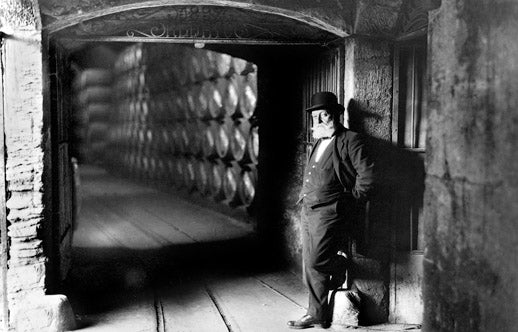
In 1886, construction began on the iconic Bodega López de Heredia Viña Tondonia, a cellar built entirely by hand and carved into the rock beneath Haro. This labyrinthine bodega, with its cobwebs, damp stone walls, and ancient barrels, remains the living core of the estate. Over the decades, through wars, economic downturns, and the relentless waves of modernization, López de Heredia held steadfast to its principles. The winery never succumbed to the industrial push that swept through Rioja in the late 20th century. Instead, it preserved its methods: manual racking, long aging in American oak, and no filtration—techniques that might appear outdated to some, but for López de Heredia, they represent the essence of authenticity.
The family’s devotion to time-honored winemaking has earned them not only the respect of collectors and sommeliers but also an almost mythical status among those who seek purity and tradition. Today, the winery remains family-owned, a rarity in an age of corporate consolidation, and continues to produce wines that defy trends while defining what Rioja once was—and still can be.
The People
The guiding hands of López de Heredia belong to the López de Heredia family itself, now in its fourth generation. At the helm is María José López de Heredia, whose eloquence and conviction have made her one of the most respected voices in Spanish wine. Her deep respect for her family’s legacy is balanced by a subtle yet powerful modern sensibility—an understanding that to preserve tradition, one must engage with the present. María José is joined by her sister Mercedes López de Heredia and other family members who share the same devotion to integrity and patience.
The family works as custodians, not innovators. Their philosophy is built upon humility before nature and time. “Our wines are not perfect,” María José often says, “but they are alive.” This statement encapsulates the essence of López de Heredia. The family doesn’t chase flawless precision; instead, they embrace the natural variations of each vintage, believing that true beauty lies in imperfection. Their cellar master, cooper, and vineyard teams are part of this same lineage of craftsmanship—some having worked with the family for decades. The trust, consistency, and dedication of these people form the silent backbone of the estate’s continued success.
Vineyards & Terroir
The vineyards of R. López de Heredia are as iconic as the winery itself. Spread across 170 hectares, they include four main sites: Viña Tondonia, Viña Bosconia, Viña Cubillo, and Viña Zaconia. Each vineyard offers a unique reflection of Rioja Alta’s terroir—an interplay of altitude, limestone-rich soils, and the moderating influence of the Ebro River.
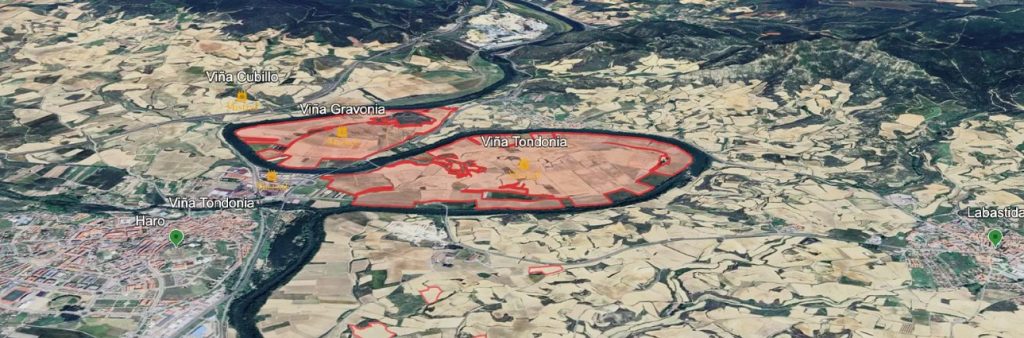
Viña Tondonia, established between 1913 and 1914, is the crown jewel. Located on a sweeping meander of the Ebro near Haro, it covers about 100 hectares of alluvial clay and limestone soils that produce wines of extraordinary elegance and balance. The vineyard’s exposure and altitude confer a slow ripening, preserving acidity and aromatic finesse, traits that define the house style. Viña Bosconia lies slightly higher, on south-facing slopes with more ferrous clay, yielding wines that are broader and richer, often reminiscent of fine Burgundy in their texture and complexity. Viña Cubillo produces wines that are vibrant and youthful, a spirited introduction to the López de Heredia philosophy, while Viña Zaconia, closer to the riverbank, contributes freshness and aromatic lift.
The climate of Rioja Alta—Atlantic in influence, with cool nights and moderate rainfall—gives these vineyards a natural equilibrium. The family’s viticulture is resolutely traditional: bush-trained vines, manual harvesting, no irrigation, and an increasing emphasis on organic practices. Sustainability at López de Heredia is not a marketing strategy but a way of life that has quietly existed for generations. The vineyards are seen as living organisms, tended with respect rather than manipulated for yield or uniformity.
Wine Portfolio
The López de Heredia portfolio is a masterclass in time, patience, and the philosophy of slow maturation. The wines are released only when the family deems them ready—a process that can take a decade or more. In the dim, humid cellars beneath Haro, barrels of American oak, many made in the winery’s own cooperage, cradle the wines as they evolve. The oxidative complexity, gentle spice, and ethereal textures that define these wines come not from technological precision, but from the slow alchemy of oxygen, wood, and time.
The Viña Tondonia Reserva is perhaps the most emblematic. Composed mainly of Tempranillo with Garnacha, Graciano & Mazuelo lending subtle support, it shows the quintessential Rioja balance of fruit, structure, and savory evolution. It is elegant yet profound, capable of aging gracefully for decades. The Viña Tondonia Gran Reserva, aged for even longer, often for 10 years in barrel and released only after additional bottle aging, represents the pinnacle of the estate’s craft—an expression of patience so complete that it almost feels monastic.
The Viña Bosconia Reserva offers a more robust, earth-driven character, often described as the “masculine” counterpart to the more graceful Tondonia. It has an old-world charm that evokes the great wines of the past, with notes of leather, tobacco, and dried cherry. Viña Cubillo, by contrast, is livelier, fruitier, and more accessible in its youth, offering a gateway to the estate’s timeless style.
López de Heredia is equally renowned for its whites—most notably the Viña Tondonia Blanco Reserva and Gran Reserva. These are not the crisp, primary whites that dominate today’s market but deep, oxidative, and textural wines of haunting complexity. Aged in oak for years, they develop flavors of nuts, honey, dried apricot, and chamomile, standing among the world’s most distinctive white wines. In these bottles lies proof that oxidation, when handled with reverence and skill, can become art.
Five Notable Wineries Nearby
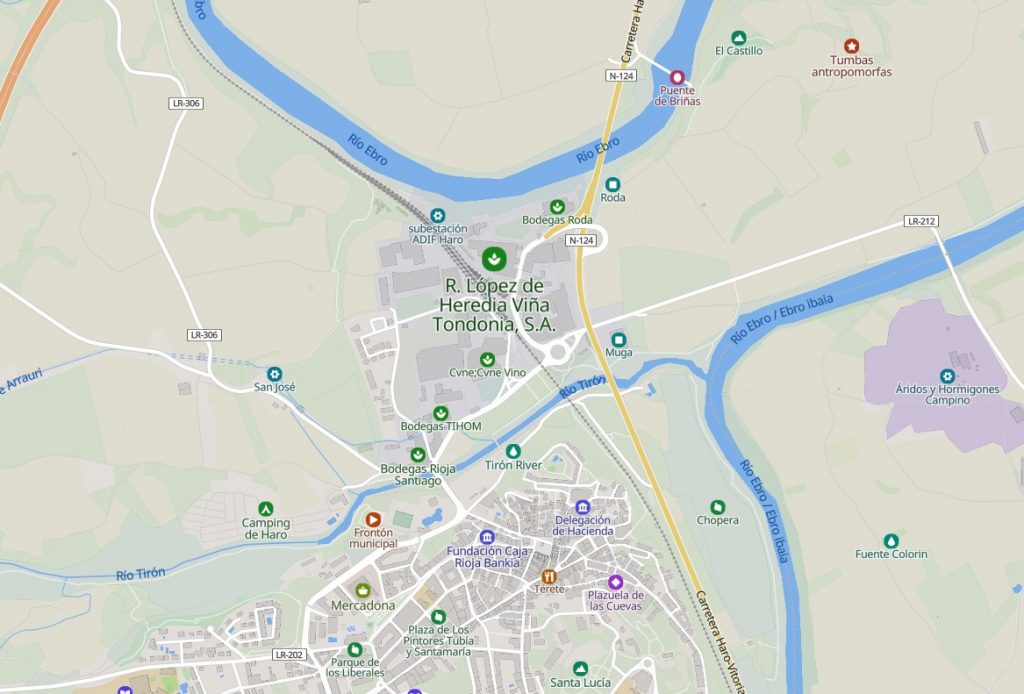
The Haro Station District, where López de Heredia resides, is one of the most historic wine neighborhoods in the world—a cluster of legendary bodegas within walking distance of each other. Among them is La Rioja Alta, S.A., founded in 1890, whose wines share the same dedication to time and tradition. Their 904 Gran Reserva is one of Rioja’s benchmark reds, balancing maturity with precision.
A few steps away stands CVNE (Compañía Vinícola del Norte de España), established in 1879. Known for its Imperial and Viña Real labels, CVNE pioneered bottling at the source and remains a symbol of Rioja’s early modernization without sacrificing heritage.
Nearby, Bodegas Muga, founded in 1932, merges tradition and innovation. Like López de Heredia, it maintains its own cooperage and still ferments in oak vats, yet its wines exhibit a slightly more modern polish while remaining true to Rioja Alta’s depth.
Also in Haro lies Bodegas Bilbaínas, established in 1901, the oldest bottling winery in Rioja. Its Viña Pomal range captures the elegance of classic Rioja, offering both freshness and age-worthy balance.
Finally, a short drive away, Gómez Cruzado completes this constellation of heritage. Founded in 1886, it stands as one of Rioja’s smallest historic wineries, producing limited quantities that bridge tradition and contemporary vitality, often emphasizing single-vineyard expression and terroir clarity.
In the world of wine, where speed and technology often dominate, R. López de Heredia remains a refuge for those who believe that greatness comes not from intervention but from surrender—to nature, to time, to imperfection. Its cobwebbed cellars and timeworn barrels are not symbols of neglect but of devotion. Each bottle, patiently matured and quietly confident, reminds us that wine is not a product but a living story, one that unfolds only for those willing to wait.
Through the lens of López de Heredia, Rioja reveals itself not as a region of trends, but as a landscape of memory—a place where the past breathes, and patience still has meaning.
Tastings
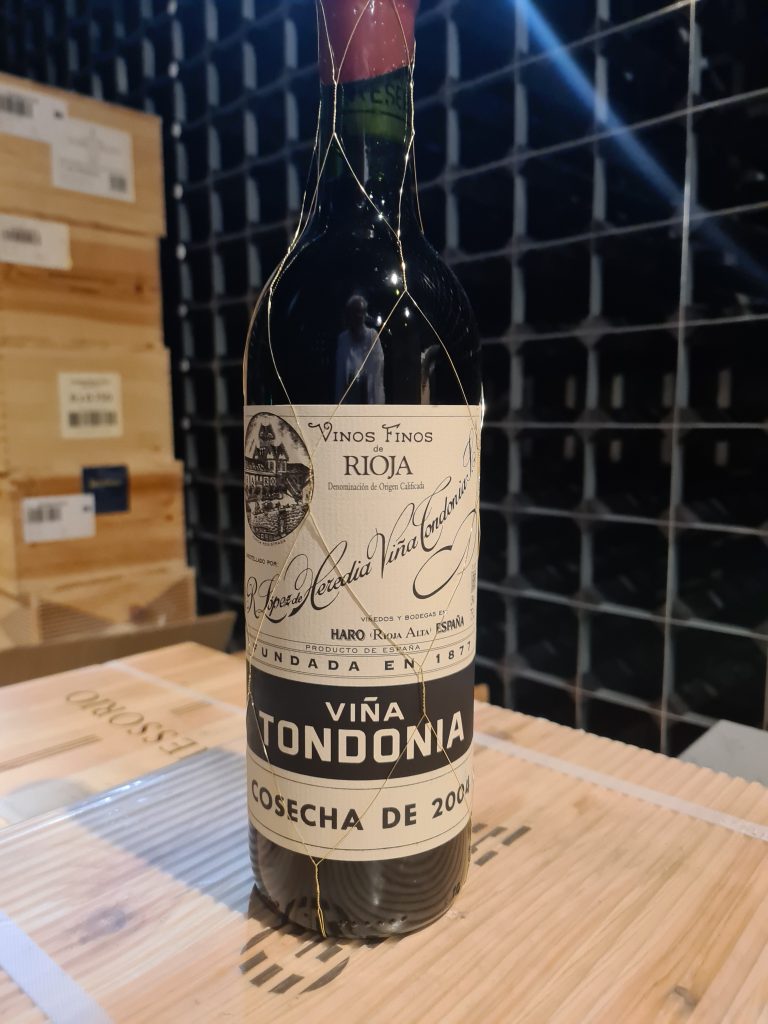
2004 Viña Tondonia Reserva, López de Heredia
The 2004 Viña Tondonia Reserva is a wine that seems to breathe history, crafted in the slow, deliberate cadence that defines López de Heredia. In the glass, it shows a pale, burnished garnet hue, hinting at its graceful maturity. The nose is mesmerising — a mosaic of dried cherry, orange rind, tobacco leaf, sandalwood, and a faint whisper of truffle and old leather. It’s a scent both nostalgic and alive, suspended between evolution and endurance.
On the palate, the wine glides rather than strides. The red fruit is supple and resolved, wrapped in layers of spice, cedar, and fine acidity that keeps everything in motion. Tannins are featherlight yet firm in their presence, shaping the wine’s delicate, almost filigreed structure. There’s no excess, no rush — only harmony. The finish lingers with notes of dried herbs, citrus peel, and that distinct oxidative patina that defines Tondonia’s soul.
A wine that doesn’t shout but whispers with authority — graceful, autumnal, and profoundly alive.


