Borgo del Tiglio has discreetly followed a different goal in an area that is frequently praised for its technical purity and aromatic immediacy. Located near the Slovenian border in the hills of Friuli’s Collio zone, the estate has established a reputation for accuracy, durability, and almost intellectual restraint rather than extravagance. These are wines that are difficult to characterise, developing gradually and rewarding perseverance, introspection, and experience. Sommeliers and collectors who prioritise depth over volume and thought over style have grown to regard Borgo del Tiglio as one of Italy’s benchmarks for serious white wine over the course of several decades.
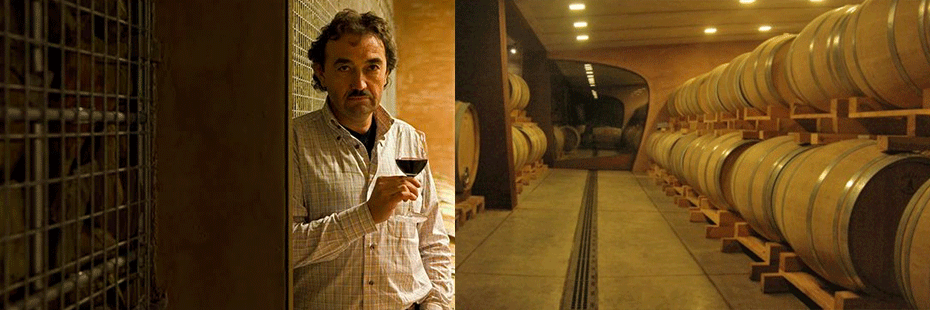
The beginning of Borgo del Tiglio’s history dates back to the early 1980s, when Nicola Manferrari made the decision to abandon Friuli’s then-dominant cooperative model. Manferrari, who came from an agricultural family, established the estate in the village of Brazzano di Cormòns in 1981. He named it after the linden tree that still remains in the centre of the property. His goal was evident from the beginning: to create white wines that could age nicely, wines that reflected season and place rather than just grape variety. During a time when Friuli’s prosperity was mostly based on fresh, early-drinking whites intended for rapid consumption, this notion was revolutionary.
Important turning points ensued as Manferrari increased and improved the Collio vineyard holdings, progressively lowering yields, experimenting with extended lees ageing, and adopting a cellar philosophy that put texture and balance ahead of aromatic show. Even while production remained modest and distribution remained exclusive, Borgo del Tiglio had already established a reputation among Italy’s most discriminating wine experts by the 1990s.
Nicola Manferrari, a winemaker whose impact extends well beyond his small land, has long been at the heart of Borgo del Tiglio. Manferrari, who was initially trained as a surveyor, brought an analytical approach to winemaking and viticulture by fusing meticulous observation with a very intuitive knowledge of vines and soils. His philosophy has consistently rejected dogma. Minimal intervention at Borgo del Tiglio is not ideological but practical, applied only when it serves the wine’s balance and longevity. Over time, Manferrari’s son, Matteo, has become increasingly involved in the estate, ensuring continuity while bringing a new generation’s sensitivity to climate change and vineyard management.

They are surrounded by a tiny workforce that operates with almost monastic focus, driven by the conviction that great wines are not made by grand gestures in the cellar but rather by thousands of little, deliberate decisions.
Borgo del Tiglio‘s vineyards are dispersed throughout some of Collio’s most striking slopes, mostly in the vicinity of Brazzano and adjacent hillside locations. These vineyards are situated on the traditional ponca soils of the area, which are a delicate mixture of sandstone and marl that were produced from old seabeds. Ponca is infamously hard to work, prone to erosion, and low in nutrients, but it is precisely this battle that gives the wines their salty depth and tensile strength.
The moderating breezes of the Adriatic Sea to the south and the cooling effect of the Alps to the north create a delicate balance that shapes the climate. Cool nights maintain acidity and aromatic definition, while warm days promote complete maturity. At Borgo del Tiglio, low yields, healthy soils, and exact harvest time are highly valued aspects of the meticulous, mostly manual vineyard work. Instead of strict certification, sustainability is tackled pragmatically with minimal treatments, careful canopy management, and a general respect for each site’s natural equilibrium.
Both Friuli’s diversity and the estate’s unique perspective are reflected in Borgo del Tiglio’s wine range in the cellar. A key component is friulano, which provides an almond-edged, textural expression that becomes remarkably complex with age. Sauvignon Blanc is handled carefully, avoiding overt varietal pyrazines in favour of depth, minerality, and length. It is frequently combined with a modest amount of other varieties. Additionally, Chardonnay is seen as a vehicle for Collio’s soils rather than an international cliché, exhibiting subtle strength and the ability to change with time. The flagship wines, such Studio di Bianco and Ronco della Chiesa, are created by protracted ageing on fine lees, meticulous parcel selection, and prolonged bottle maturation prior to release.
Oak is utilised wisely and sparingly as a structural tool rather than as a flavouring. With layers of citrus, stone fruit, herbs, and savoury aromas that deepen over time, the result across the range is a selection of wines that speak gently but persistently.
Borgo del Tiglio is a part of an amazing constellation of manufacturers in Collio and the neighbouring territories, rather than existing in a vacuum. Nearby, Jermann has been instrumental in drawing attention to Friuli on a global scale, especially with famous wines like Vintage Tunina, which combine regional and foreign types to create a unique personality.
One of Friuli’s traditional pillars, Livio Felluga is located just across the hills. Its history is based on careful vineyard mapping, and its extensive portfolio shows the region’s potential for both immediacy and ageing. Venica & Venica, a family estate that produces elegant Sauvignon Blanc and Friulano from prime hillside locations by fusing technical precision with a strong sense of place, is equally prominent. Gravner, which is nearer the Slovenian border, takes a very different but philosophically similar approach, using amphorae and lengthy macerations to investigate depth, structure, and time. Like Borgo del Tiglio itself, Edi Keber is a significant neighbour whose unwavering commitment to Collio Bianco has made him a benchmark for authenticity and terroir expression.
Borgo del Tiglio is now regarded as a low-key standard, a producer whose impact is more noticeable in tasting rooms and cellars than in advertising campaigns. Its wines show that longevity, seriousness, and emotional resonance are not exclusive to red wine, challenging preconceived notions about Italian white wine. Borgo del Tiglio provides sommeliers, wine buyers, and ardent aficionados something that is becoming more and more uncommon: wines that demand attention, reward perseverance, and stay remarkably true to their source. The estate’s dedication to minimal intrusion and maximal contemplation appears not only pertinent but crucial in a time of cacophony and immediacy.
