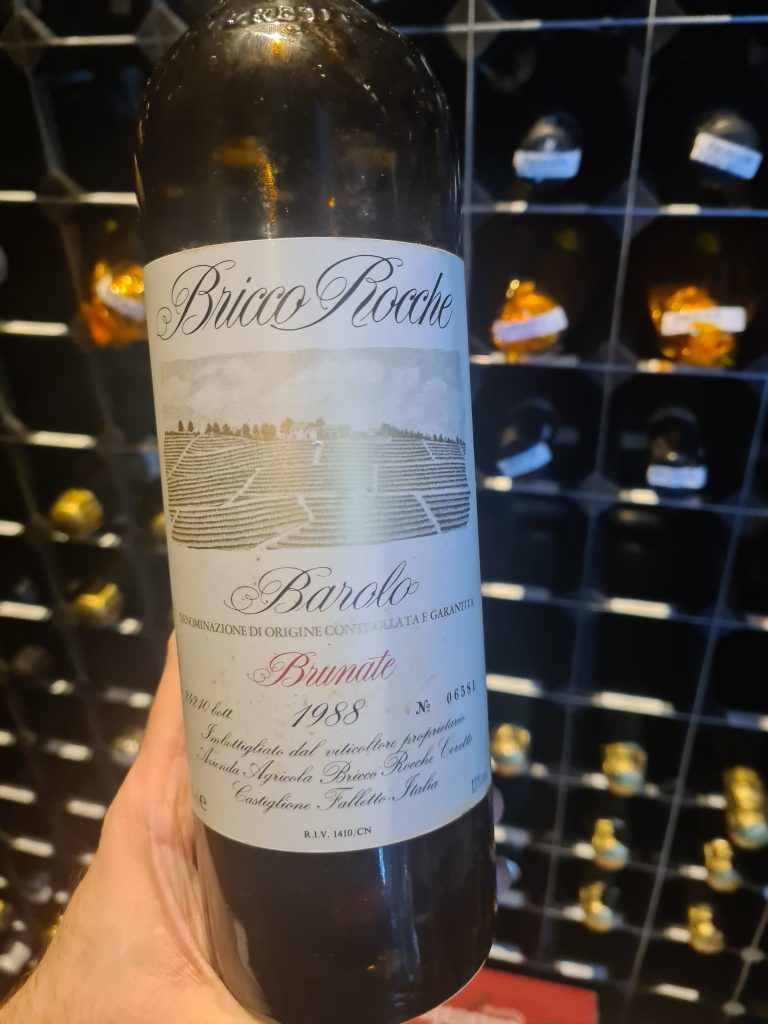
If you walk the hills above Castiglione Falletto, the name Bricco Rocche might not immediately ring a bell outside Piedmont. But for anyone interested in Barolo’s history, it marks a turning point — the moment this iconic wine region began to articulate itself not just as a place, but as a collection of individual vineyards, each with its own voice.
Through much of the 20th century, Barolo was a wine that demanded patience and respect but rarely offered clarity. Long macerations, ageing in large neutral casks, and a market that prized longevity over nuance meant many wines were austere, sometimes impenetrable. Vineyards were largely anonymous. People drank Barolo but rarely thought about the slope, the soil, or the microclimate that shaped it.
Everything began to shift in the late 1970s, when the Ceretto family acquired Bricco Rocche. At the time, this modest vineyard — perched at roughly 350 metres, with Diano sandstone, marl, and clay soils — was just one small hill in a fragmented region. What the Cerettos recognised, inspired in part by the French concept of terroir, was its potential to speak clearly through Nebbiolo. They saw that Bricco Rocche could become more than a plot of land; it could become a statement.
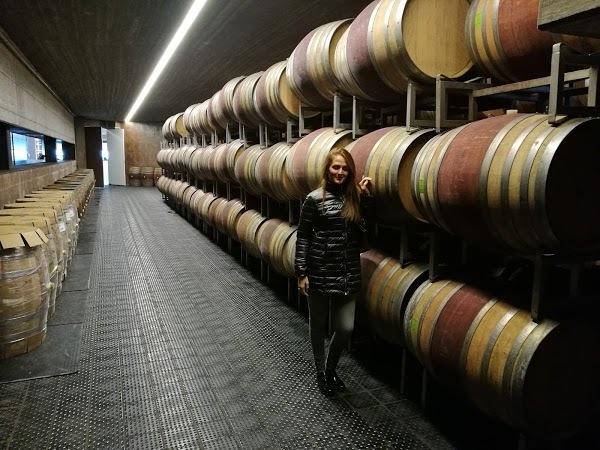
By 1982, the Cerettos had built a winery directly above the vineyard. It was both a practical and philosophical act: gravity-fed cellars, controlled fermentations, careful oak ageing. Crucially, Bricco Rocche became a monopole — a rarity in Barolo, where vineyards are often split among many owners. This allowed the Cerettos to manage the site consistently, vintage after vintage, and to let its character emerge without compromise.
The wines that followed were different. They maintained Barolo’s structure and tannic intensity, but they also offered transparency: red cherry, wild strawberry, floral notes, and mineral tension all reflecting the vineyard itself, not just the cellar’s hand. Bricco Rocche became a bridge between the austere wines of the past and the expressive, site-driven Barolos of today.
In the decades since, Bricco Rocche has quietly defined what a central Castiglione Falletto Barolo can be: balanced, age-worthy, and unmistakably tied to its hillside. With patience, the wines reward with layers of truffle, leather, herbs, and savory earth — a slow revelation of both place and history.
Today, Bricco Rocche stands not only as a vineyard, but as a milestone in Barolo’s story. It reminds us that greatness in wine is rarely sudden. Sometimes, it emerges quietly, in a small monopole on a rocky hill, where a family decided the vineyard itself deserved to be heard.
The wines